Educational Offshore: How Kazakhstan’s Ministry of Higher Education is Selling Out the Future
Critique of Sayasat Nurbek’s 2026 Reforms: Facts and Real Problems of Education in Kazakhstan.
Мақаланы қазақ тілінде осы жерден оқыңыз. Читать статью на русском здесь.
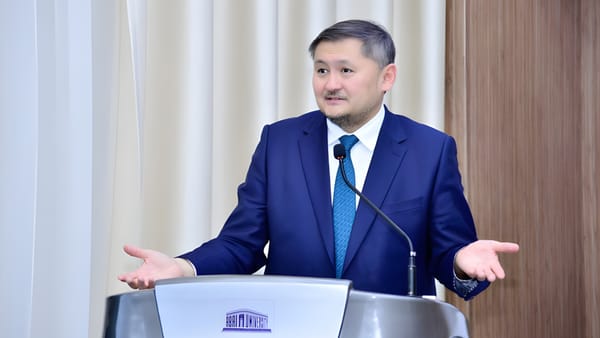
While Minister of Science and Higher Education Sayasat Nurbek tours international stages with glossy presentations on "three-layered nesting dolls" and digital avatars, Kazakhstan’s educational system is being hollowed out into a marketplace for Western franchises. We’ve analyzed the facts: behind the "Regional Hub" branding lies the degradation of national institutions, a looming student debt crisis, and the wholesale transfer of a strategic sector into private hands.
"Franchise Colonization": Why 33 Foreign Branches Signal Surrender
The Minister touts the rapid entry of foreign universities (Arizona, Heriot-Watt, De Montfort) as a victory. In reality, it is a confession of professional impotence by his own department.
- The Facts: Instead of investing billions into raising the salaries of Kazakhstani professors—who currently survive on crumbs—the Ministry is subsidizing "prestigious" foreign brands.
- We are creating "educational enclaves." Kazakhstani tax tenge are being used to prop up foreign intellectual property. This is intellectual outsourcing: an admission that we cannot educate our own children and must buy "intellectual fast food" from abroad.
- The Outcome: A domestic brain drain. The best minds flee to these foreign branches, while regional state universities are left as "diploma mills" for those who cannot afford the "Arizona" lifestyle.
The "Skills" Trap: Turning Universities into Corporate Training Centers
Nurbek insists on aligning education with the labor market via his pet project—the "Atlas of New Professions."
- The Facts: Kazakhstan’s labor market remains primitive, dominated by the extractive sector and basic services. Tuning universities to current "employer demands" dooms the country to eternal technological backwardness.
- A university is not a vocational school. Its job is to form citizens and researchers, not "cogs" for a specific LLC. Replacing fundamental education with "Hard/Soft/AI Skills" is an intellectual simplification of the nation. We are training service staff, not creators of new knowledge.
- The Digital Illusion: The hype around AI agents and avatars is a smokescreen. In a country where regional colleges struggle with basic heating and stable internet, claiming "95% AI coverage" is cynical window-dressing.
The Market Over the State: The PPP and Credit Trap
"Market mechanisms must work," the Minister declares. For any social-economic analysis, this is a massive "red flag."
- Dormitories as Business: The Public-Private Partnership (PPP) model, where the state pays developers for student housing, is a win for the construction lobby but a loss for society. The state pays 6–7 billion tenge annually to private firms.
- This isn't a solution; it’s feeding the oligarchs. In six years, when the state's compensation ends, these buildings remain private property. The state doesn't own its infrastructure; it rents it at a premium.
- The Result: The Ministry has no walls of its own. If a developer decides a hotel is more profitable tomorrow, students will be on the street, and the state will have no legal leverage.
Debt Peonage: Importing the American Tragedy
Instead of 100% coverage for free grants, the Ministry is pushing "differentiated grants" and loans at 1–3%.
- The Facts: Programs like "Keleshek" and low-interest loans are a "soft" introduction to lifelong debt for 18-year-olds.
- The Minister is carbon-copying the disastrous U.S. model, where student debt ruins lives. In a country with massive resource wealth, forcing youth into debt for the basic right to education is a crime against the social state.
- The Logic: Education becomes a financial shackle rather than a social elevator.
Science for Sale: The Akimat Corruption Risk
Handing "applied science" to local governors (Akimats) starting in 2025 is the final nail in the coffin of Kazakhstan’s academic tradition.
- The Facts: Spending 1% of GRP on regional science is a fantasy in our current administrative climate.
- We know how local governments work. "Scientific councils" under Akimats will become slush funds for "friendly" companies performing pseudo-research. Fundamental science will die because a local governor doesn't need the "Higgs Boson"—he needs a paper justifying why the new sidewalk was laid "scientifically."
Verdict: Reform as Self-Liquidation
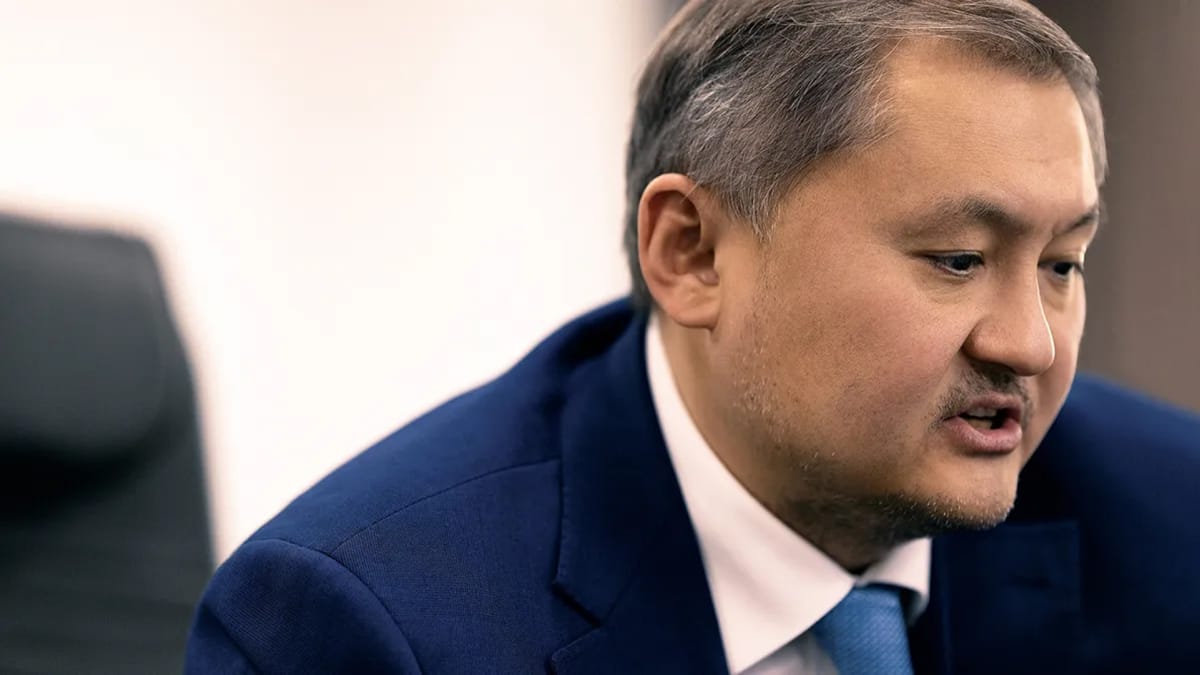
Sayasat Nurbek is a talented presenter, but his policy is the liquidation of Kazakhstan's educational sovereignty.
- We give infrastructure to private developers.
- We give content (curricula) to foreign brands.
- We give financing to the banks via student loans.
This is not a transformation. it is a fire sale. While we build "world-class campuses" in luxury residential complexes, the systemic crisis in rural schools and regional colleges guarantees a generation of "digital nomads" who hold an Arizona University degree but have no future in their own country.
Minister Nurbek, whose interests are you serving: the nation's, or the global market's?